Vachi, Product Designer
Branding, Content strategy & Product Designer
Drove funnel optimization by leading end-to-end checkout flow redesign, reducing cart abandonment by 80% through data-informed. UX decisions, user validation, and edge-case handling. Accelerated product delivery by building a scalable design system and documentation framework, enabling 3× faster design-to-engineering handoff across web and mobile platforms. Partnered cross-functionally with engineering to ship 15+ production features, implementing structured QA and accessibility checks
that reduced post-launch defects by 60%. Strengthened product operations by standardizing release readiness processes, improving state coverage, usability consistency, and overall customer experience quality.
Vachi
Process
Discovery & Research
Nobody was selling what the fabric makes possible.
The audit began with a competitive analysis across Lululemon, Alo Yoga, Spanx, Wolford, and key DTC activewear labels, mapping each against axes of functional vs. emotional and minimal vs. expressive.
The gap was immediate. Every competitor was selling the garment, the fit, the compression, the colorway, the technical spec. Nobody was selling what the fabric makes possible once you stop thinking about it.
It moved when I moved. I forgot I was wearing them.— User interview synthesis
That invisibility, Lycra getting out of the body's way, became the emotional core of the rebrand. Not a legging that performs. A legging that disappears.
User Interviews
User interviews were run with women wearing leggings across dance, yoga, gym, commute, and everyday contexts, asking not about fit, but about feeling. When did the legging feel right? The answer was always the same: when it stopped existing as a garment entirely.
Wear-diary sessions had participants photograph moments of restriction versus freedom throughout their day. The contrast was sharp: restriction was always the garment asserting itself; freedom was always it disappearing. Vachi's Lycra sat firmly in the second category. The brand just needed to say so.
From this research, four words surfaced repeatedly and unprompted, and became the foundation for everything that followed.
Women don't think about their best leggings. They think about what they did while wearing them.
Restriction was always perceived as a garment problem. Comfort felt like a body achievement.
The biggest purchase barrier: disbelief that one legging could span gym, street, and going out.
Movement photography drove more purchase intent than technical copy. Seeing mattered more than reading.
Brand Direction
Make the invisible visible
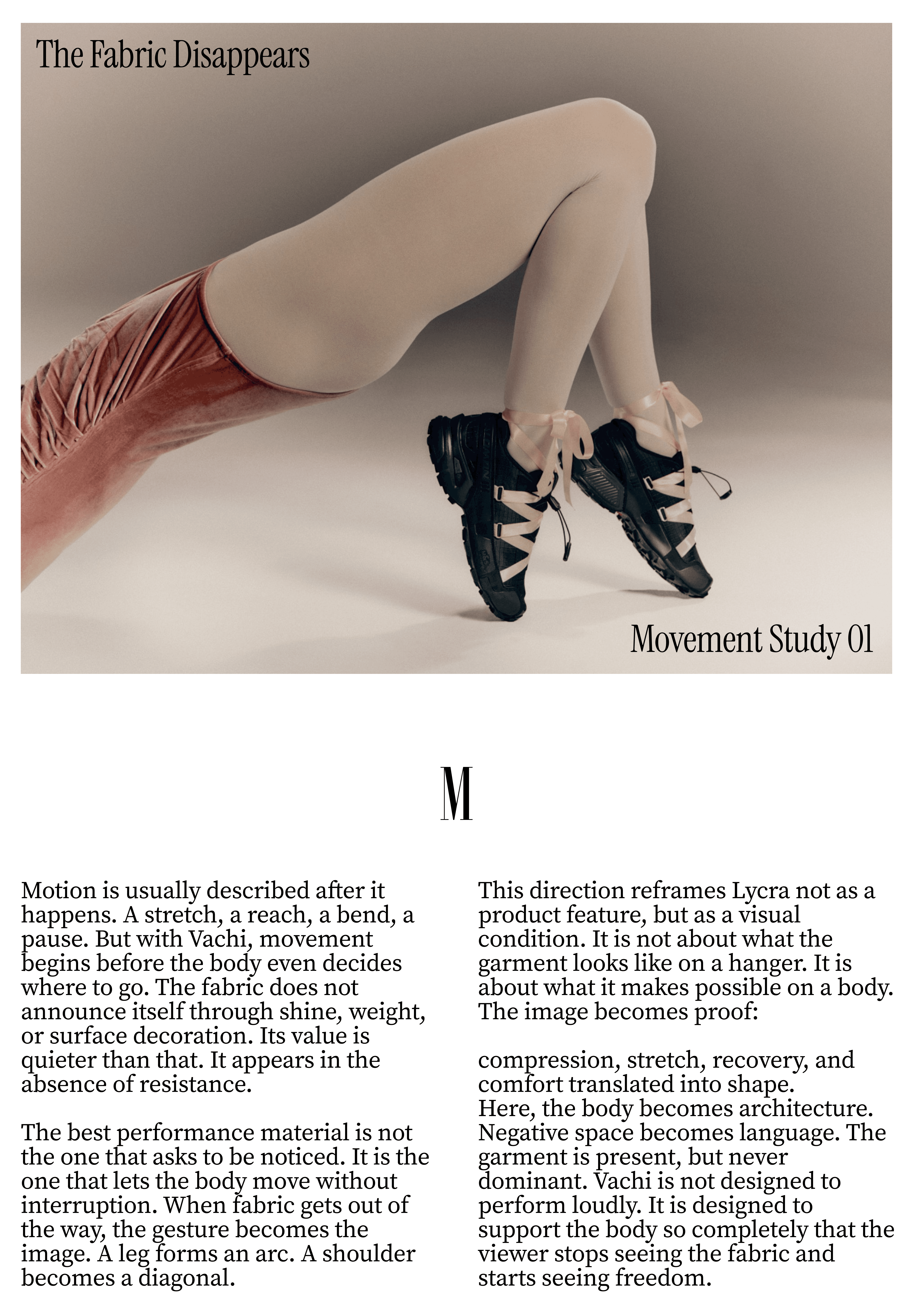
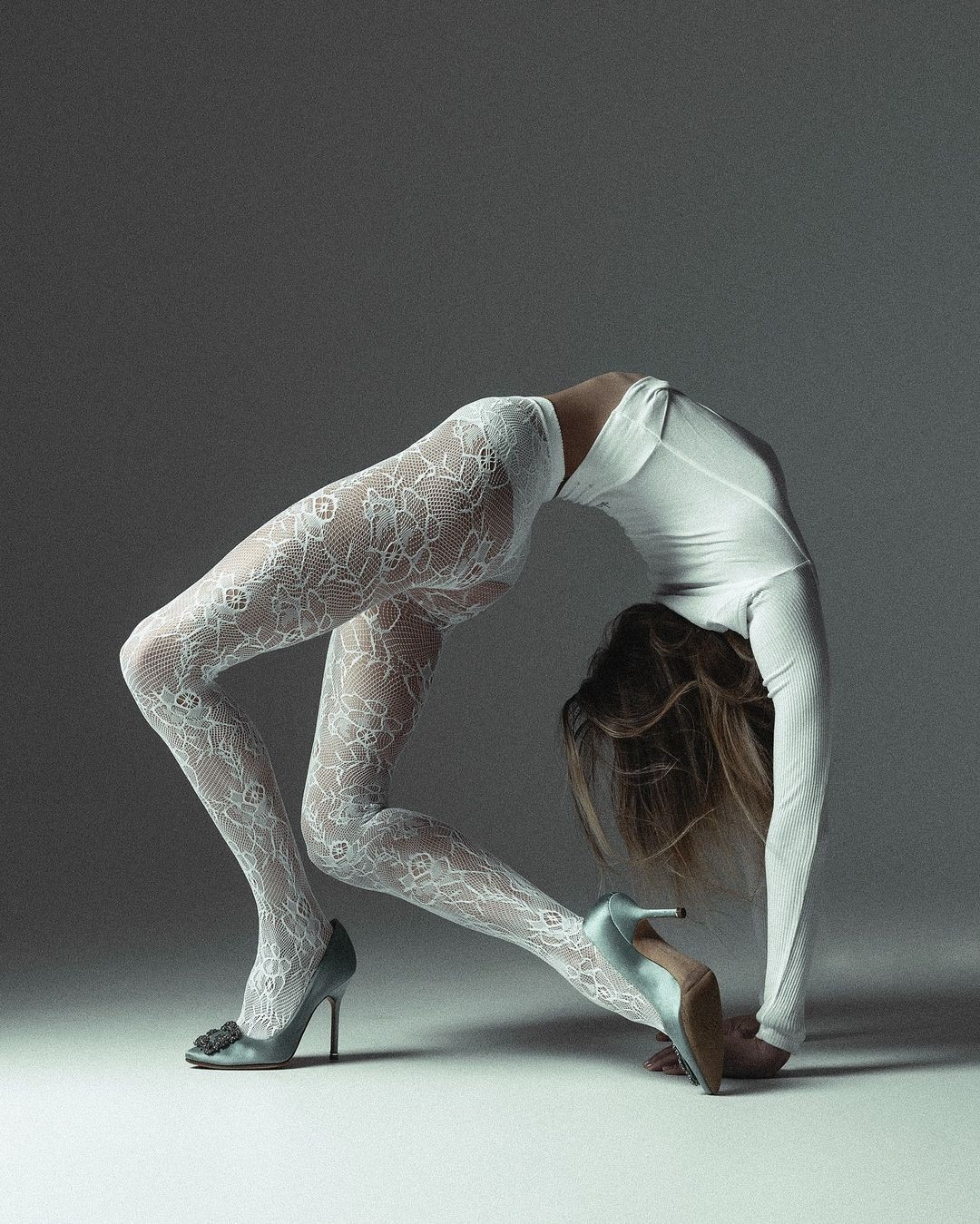
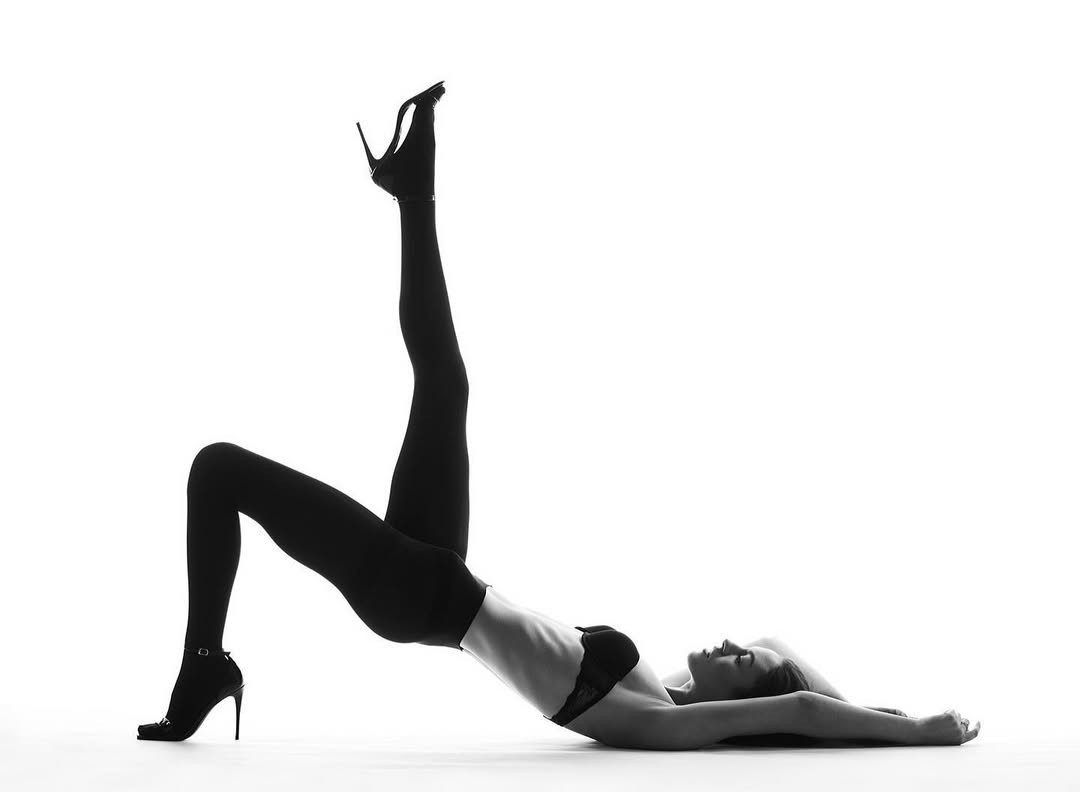
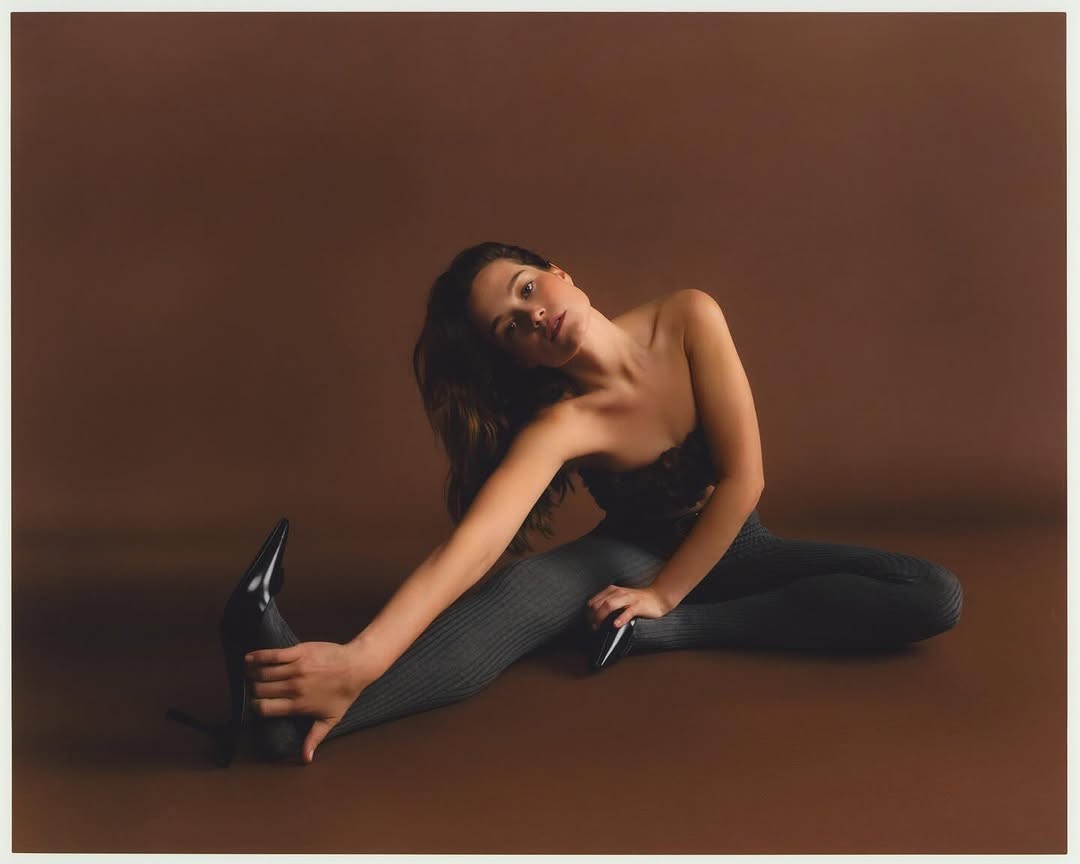
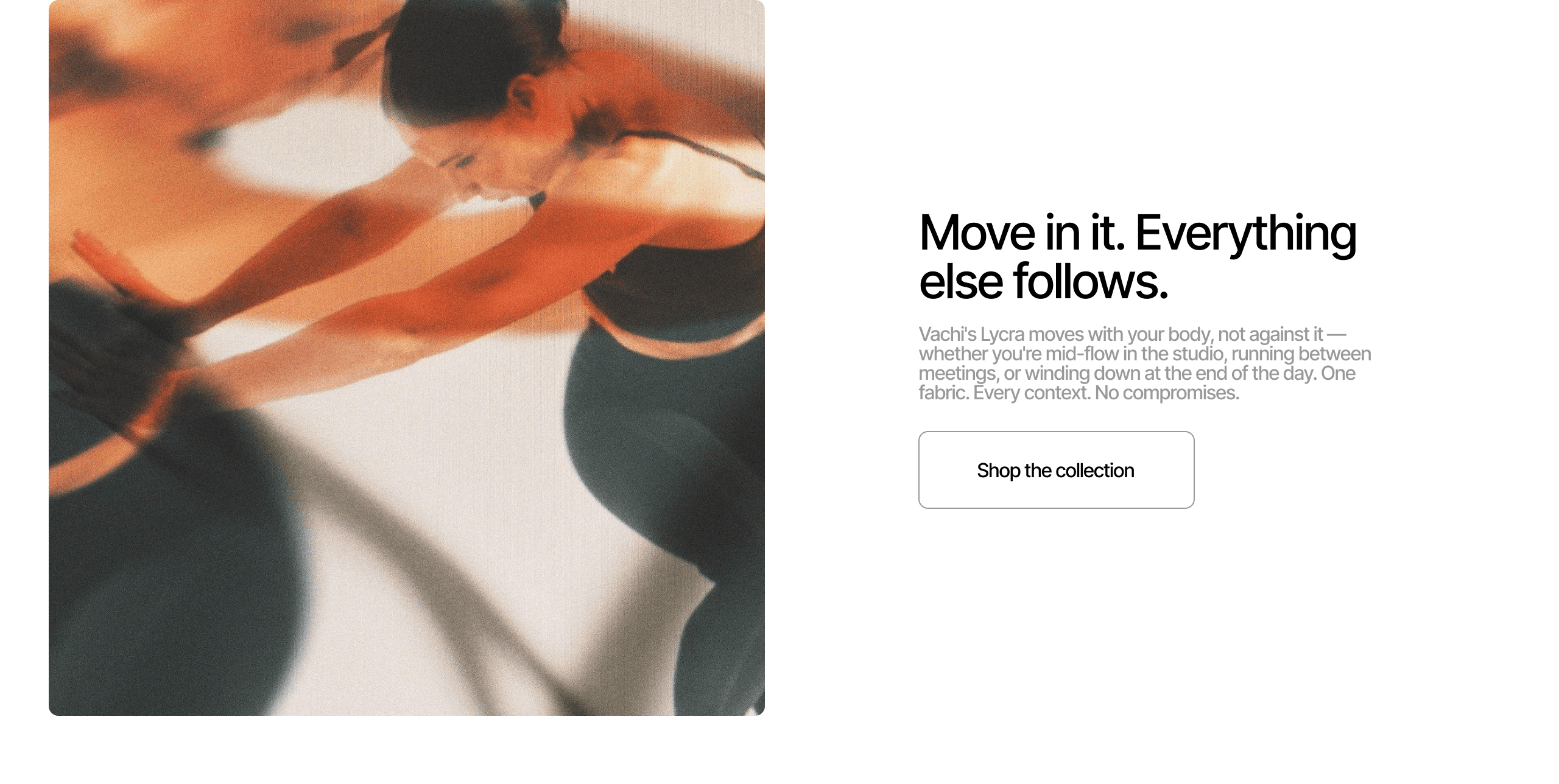
The core brand truth identified from research: the best Lycra is the fabric you stop noticing. The brand story needed to make the invisible visible, show what the fabric enables, not what it looks like on a hanger.
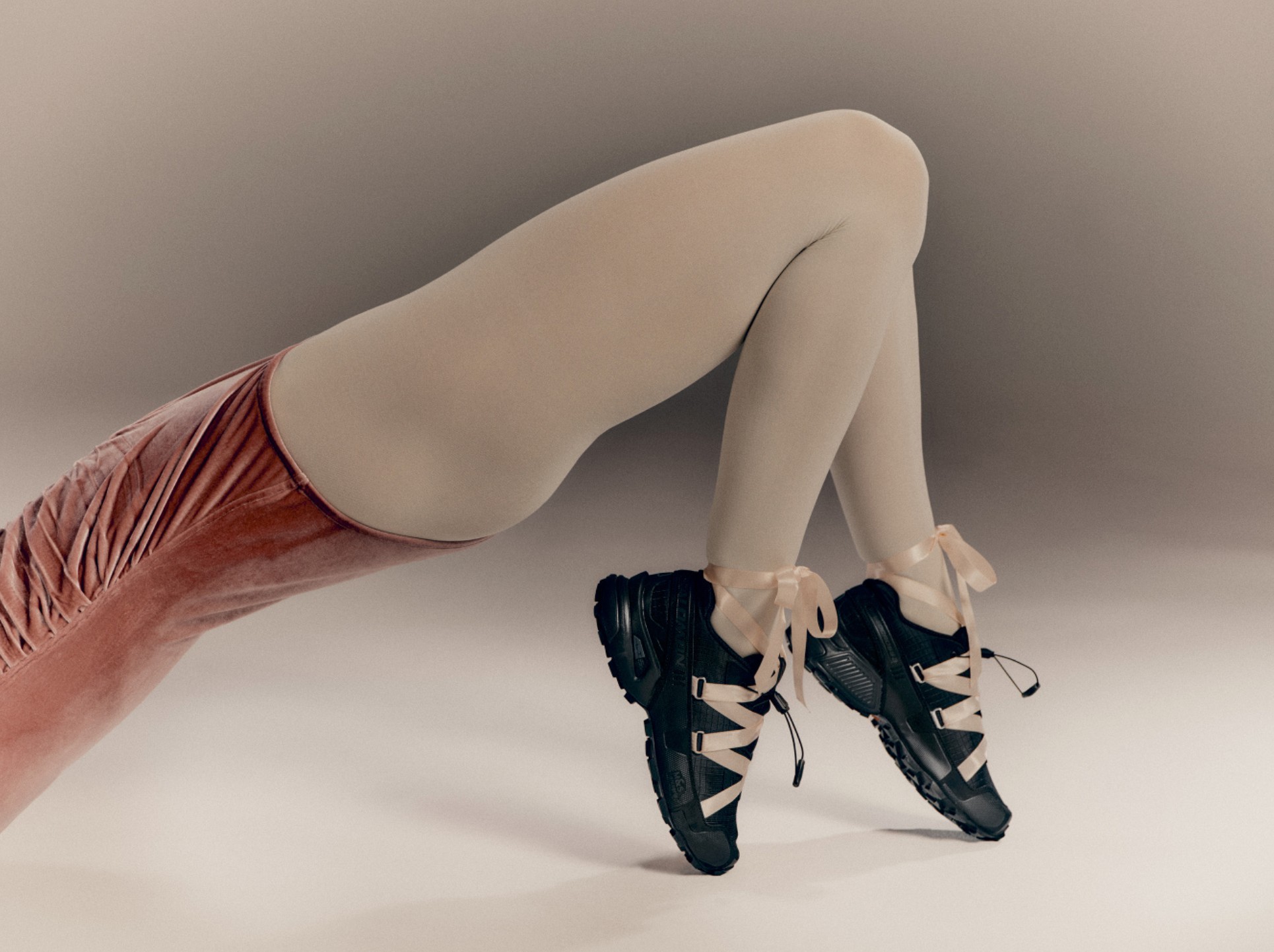
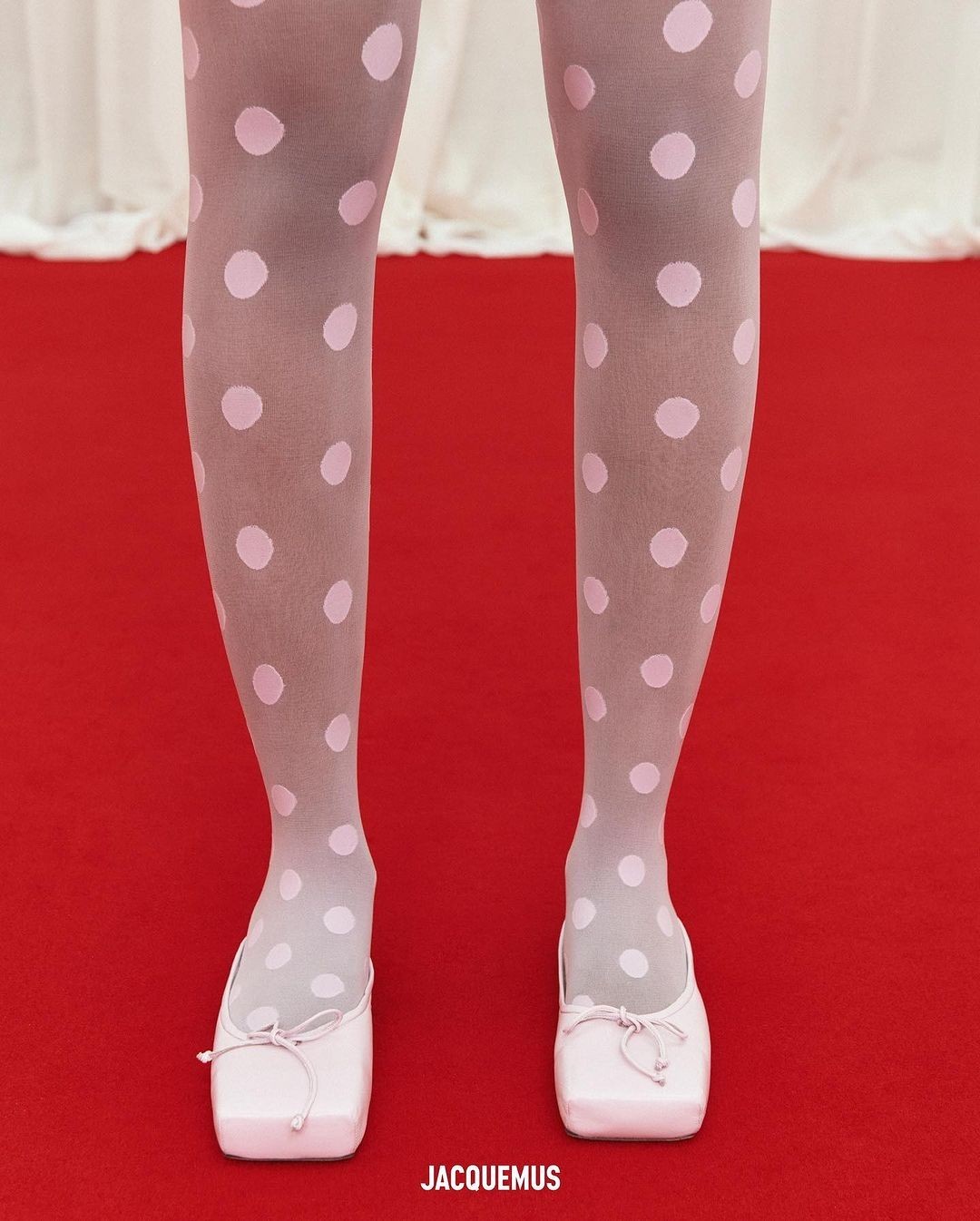
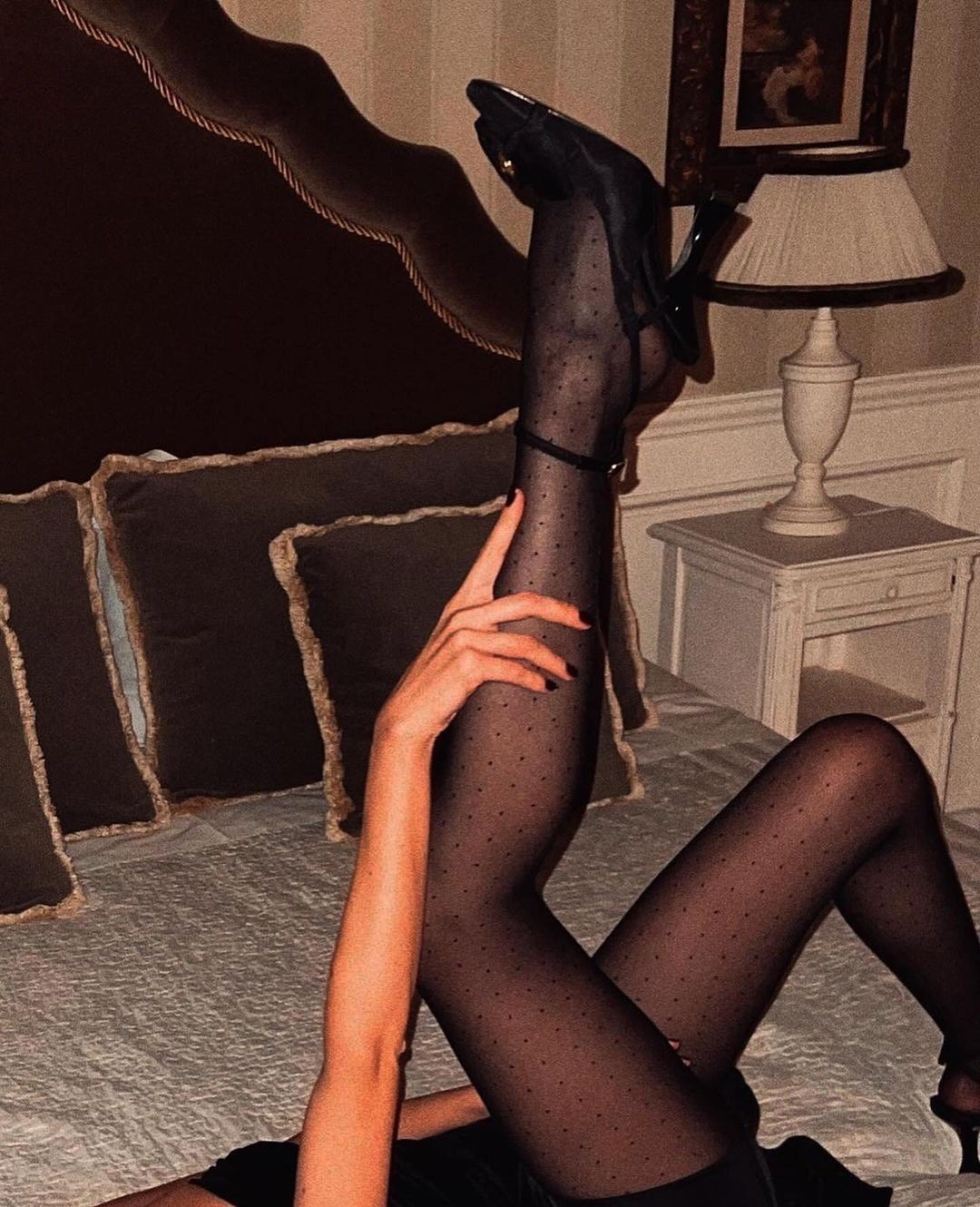
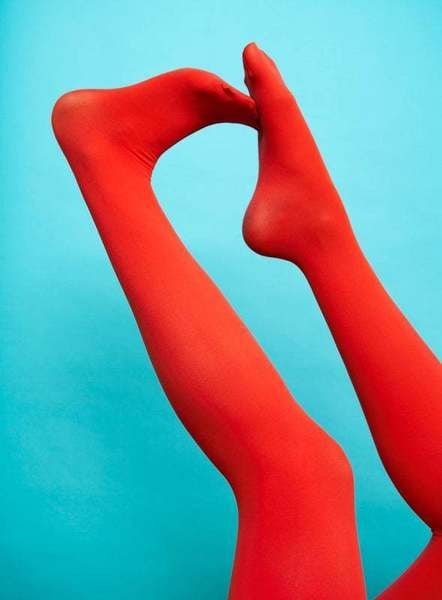
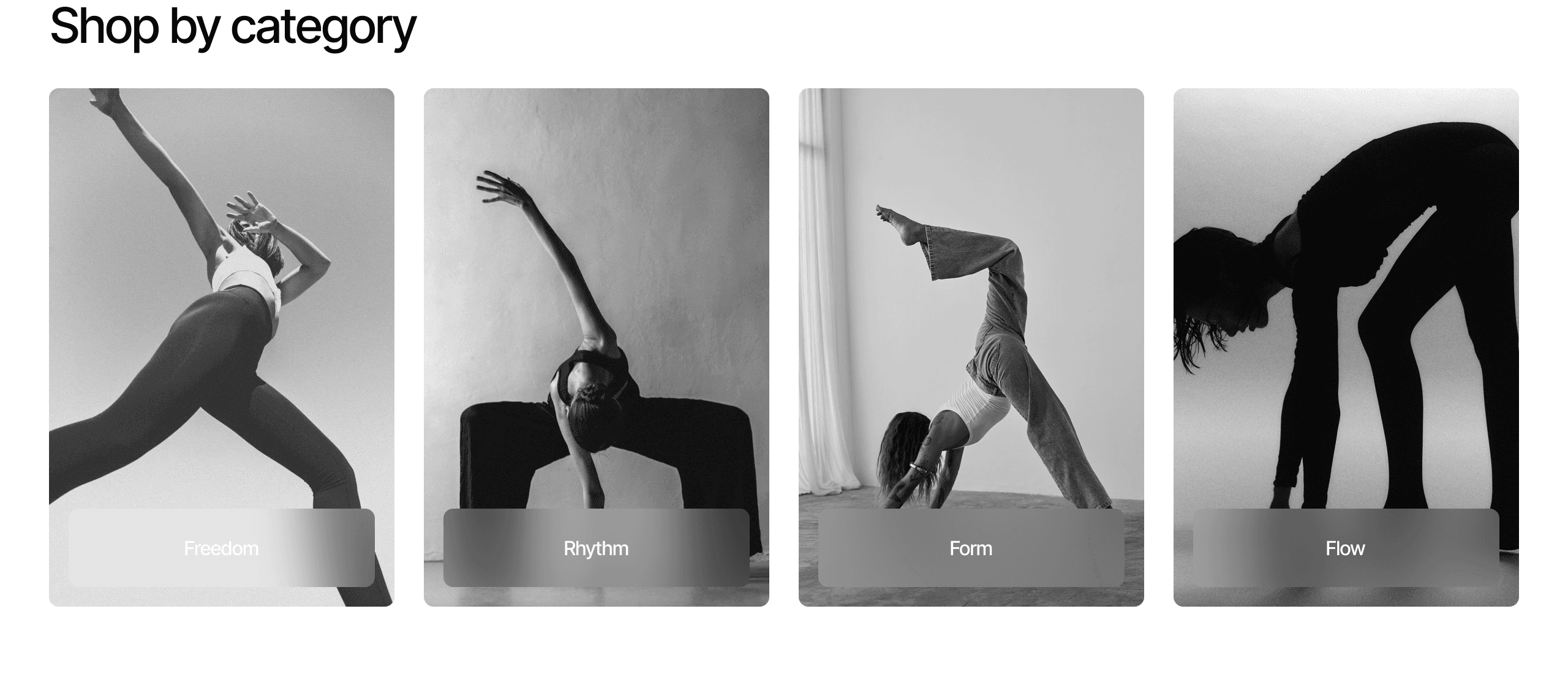
The mood board was built around black-and-white movement photography: images where the human body creates geometric negative space, arcs, triangles, silhouettes. Grayscale removed colour distraction so that the shape of motion became the subject. Two directions were tested with stakeholders: one colourful and product-forward, one editorial and movement-led. The latter won decisively in preference testing.
That became the visual language: bodies as architecture, fabric as evidence, motion as the message. Every design decision, photography direction, layout, typography, colour, was built to reinforce a single argument: Vachi is what happens when a garment gets out of the way.






Brand Pillars
Four words.
Everything follows.
From research, four words surfaced repeatedly and unprompted. They became the pillars of the visual identity, the copy voice, the product naming architecture, the category navigation, and the site footer, the entire navigational and conceptual spine of the brand.
01: Rhythm
The leggings move when you move. Beat before compression.
Product: Rhythm.
02: Flow
Studio to street to sleep. Continuity is the product.
Products: Freedom Flow · Flow
03: Form
Lycra follows the body. The body was always the design.
Product: Form Fitter
04: Freedom
The best legging is the one you forget you're wearing.
Products: Freedom · Freedom Fits
Checkout Page

Design System
