Back
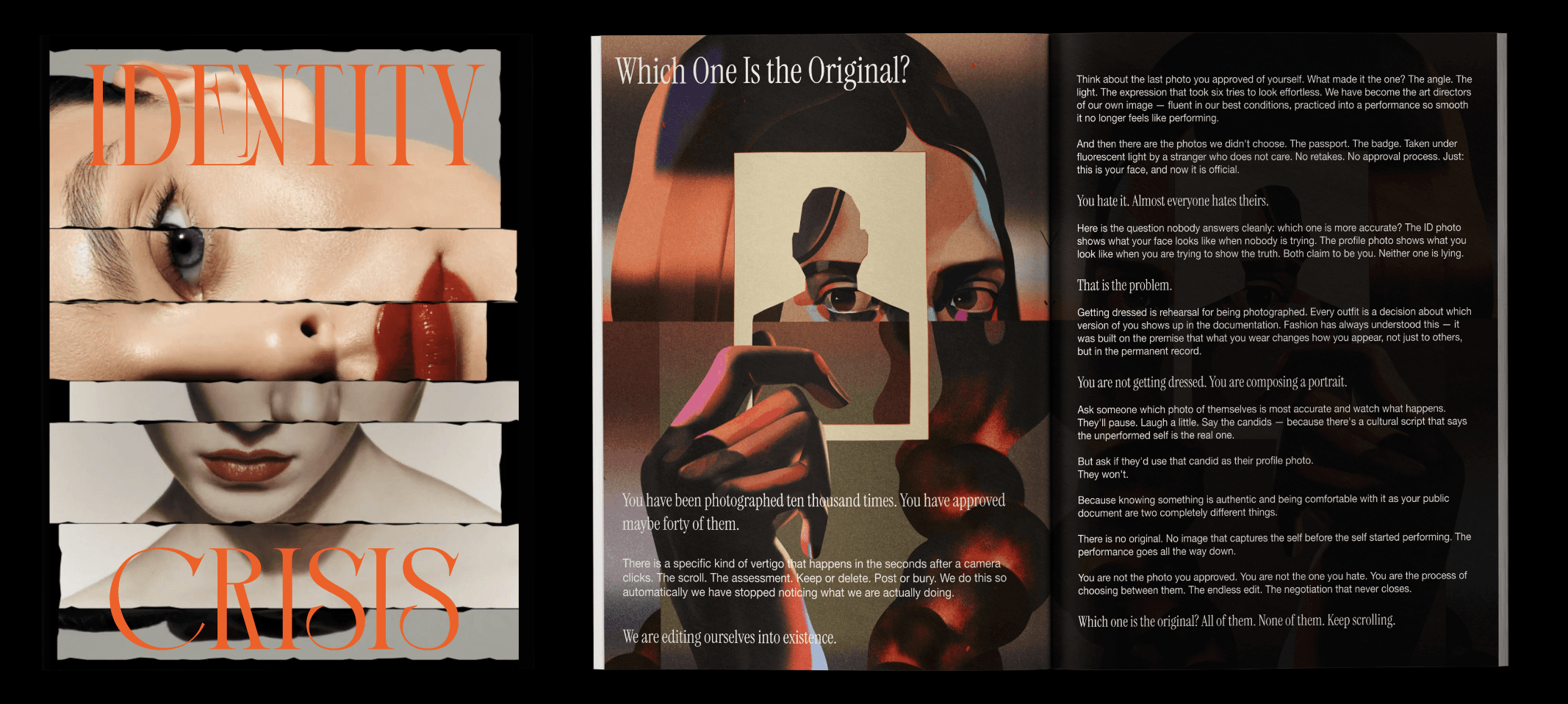
Identity Crisis
Role: Graphic Designer
Tools: Adobe InDesign, Figma, Adobe Photoshop
Year: 2024
Concept & Editorial Reasoning
The problem with fashion media
Every major fashion magazine operates on the same premise: aspiration. Here is a beautiful person. Here are beautiful clothes. Become this. The face is a vehicle for the product. The self is secondary to the aesthetic.
Identity Crisis rejects that entirely.
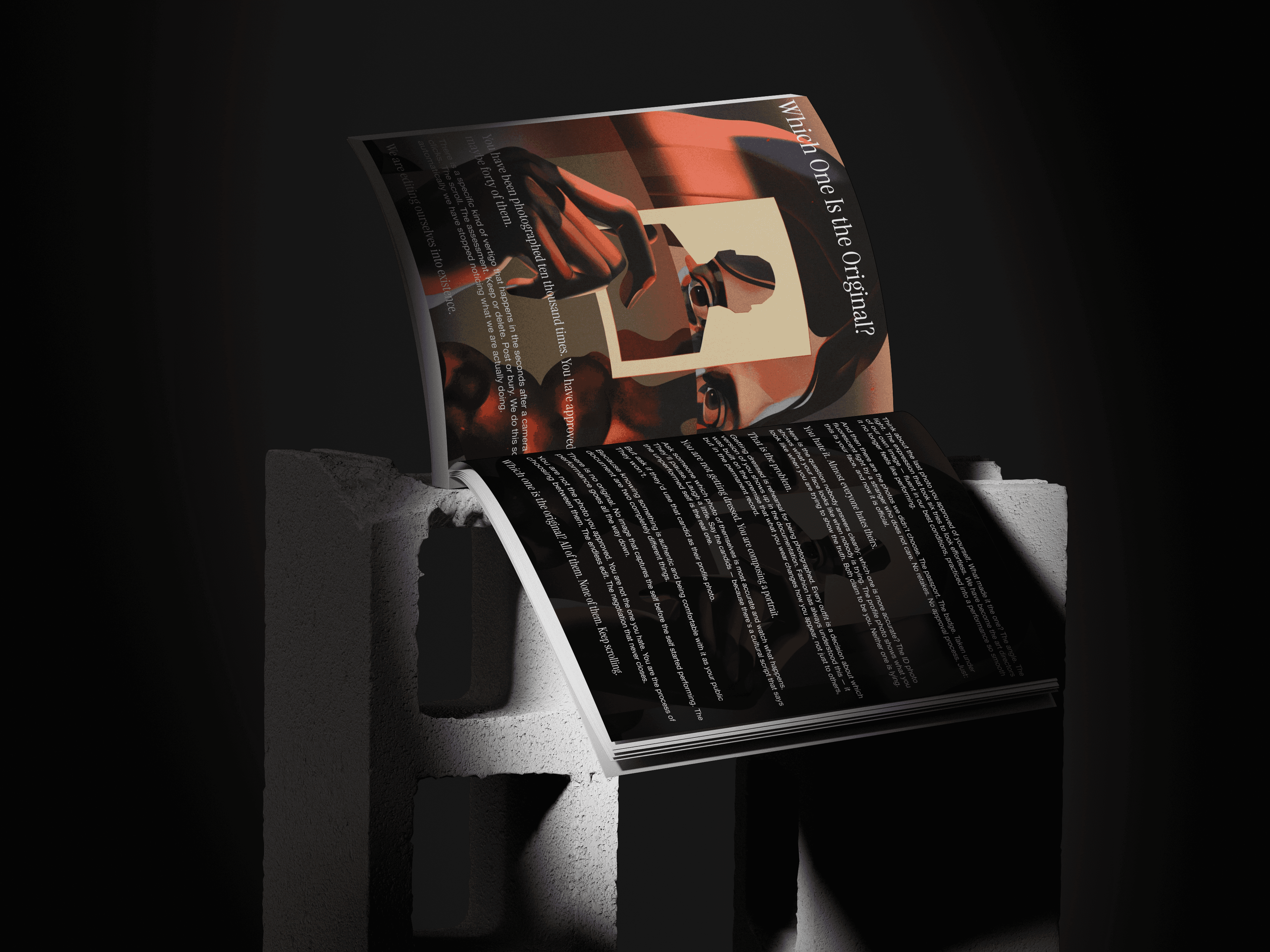
The face isn't a decoration. It's the subject. Fashion isn't the destination, it's the evidence. Evidence of who you're trying to be, who you're running from, what culture told you to want, and what you quietly refused.
The core tension
The name does two things simultaneously:
It describes a psychological state — disorientation, fragmentation, the unsettling feeling of not knowing who you are under everything you've put on.
It describes a cultural moment — we are living through a mass identity crisis. Post-pandemic, post-algorithm, post-influencer. Everyone is performing a self online and quietly unraveling offline. Fashion is both the symptom and the coping mechanism.
The magazine lives in that gap. Between the look and the person underneath it.
The visual language
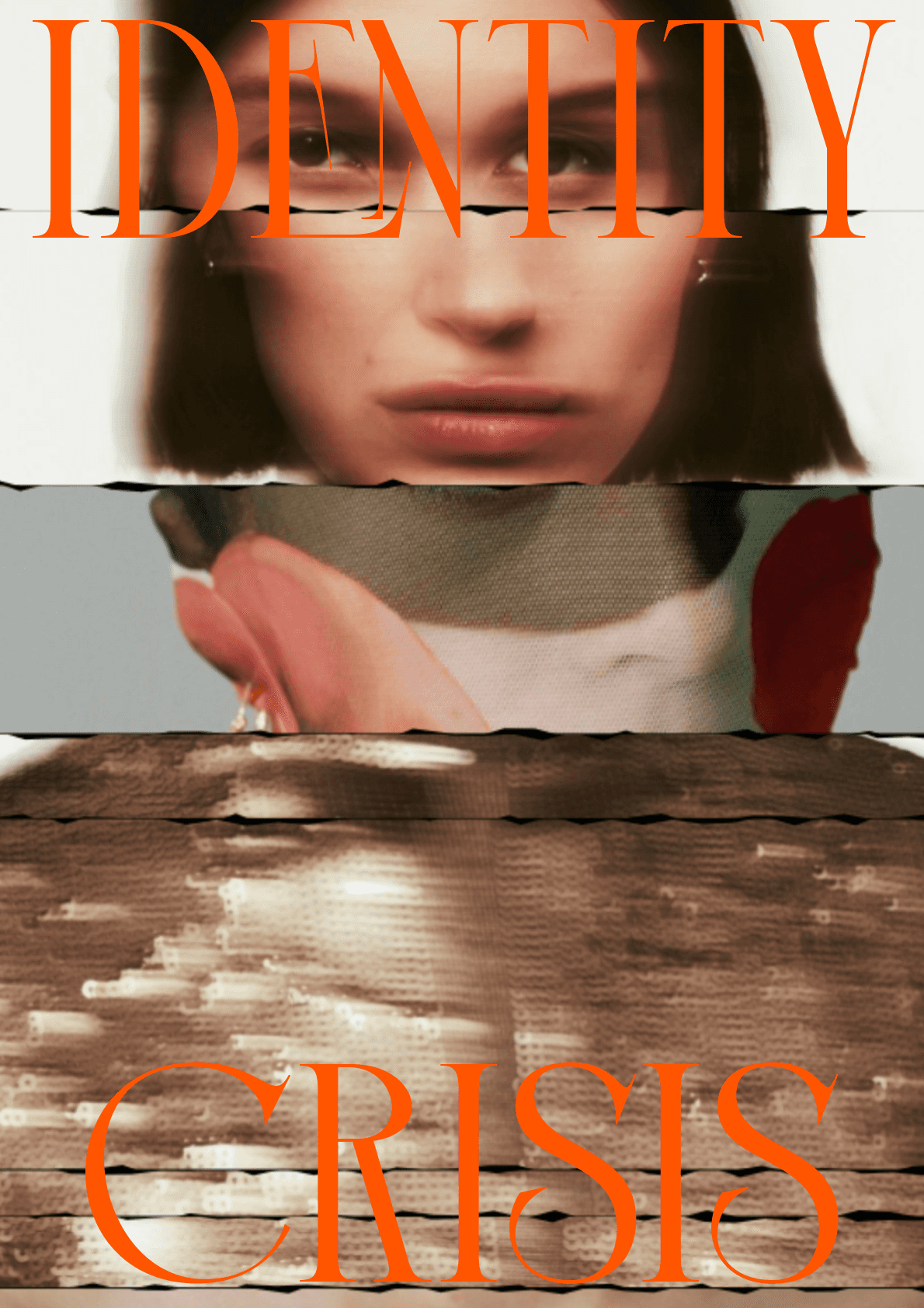
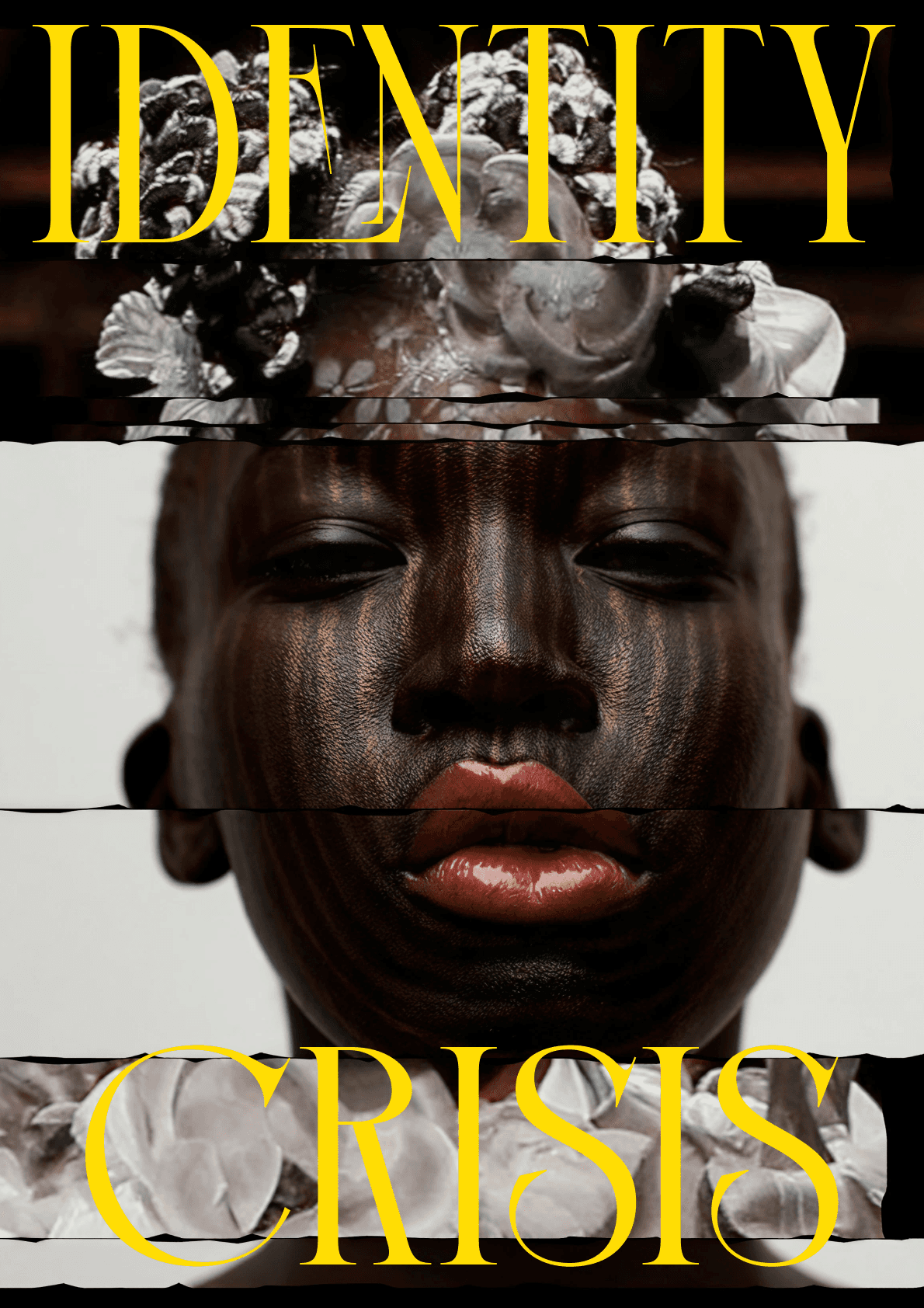
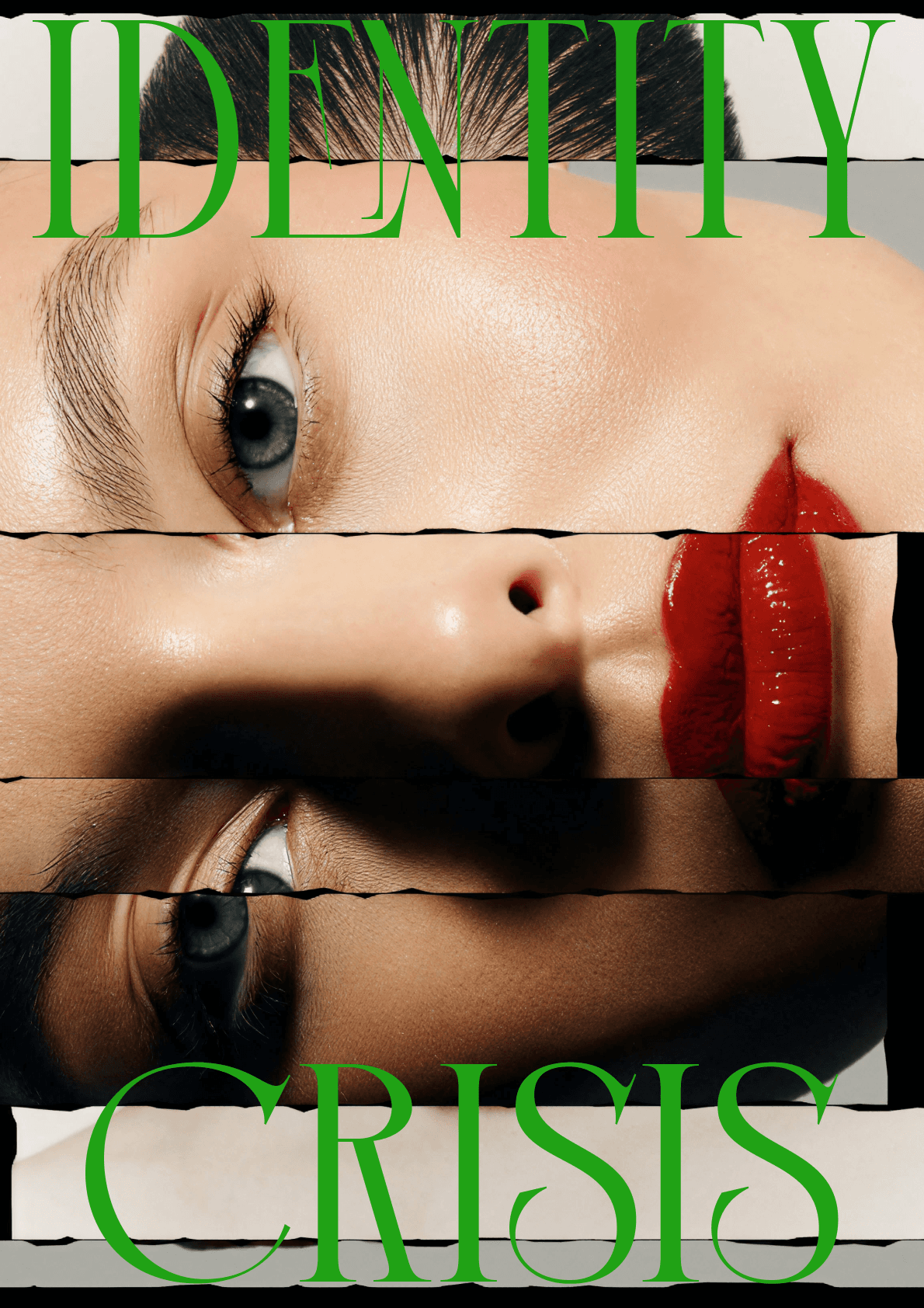
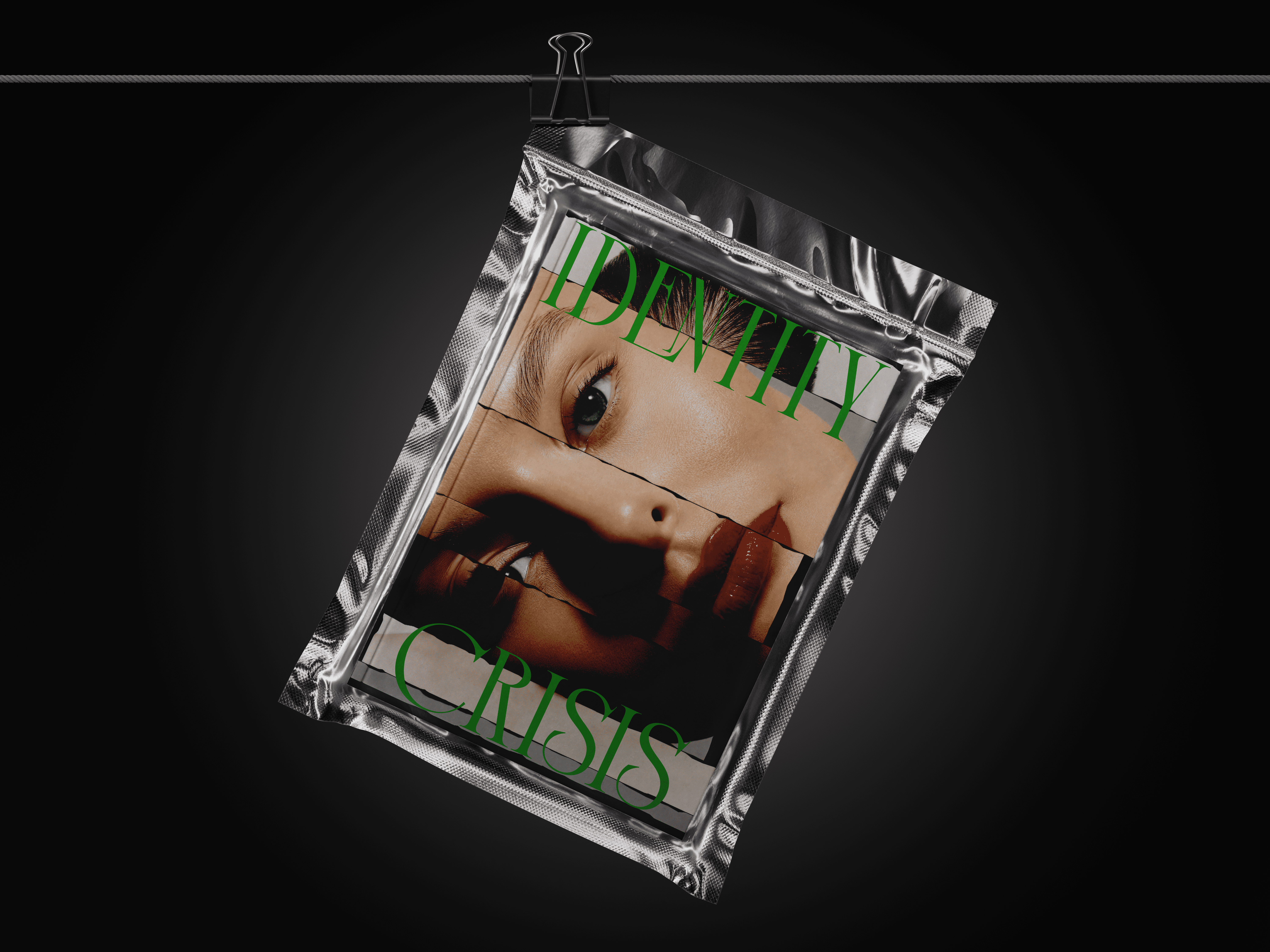
The torn-strip collage technique on the covers is not decorative. It's the thesis.
A face — the most intimate, recognizable, irreducible thing about a person, is literally fragmented. Sliced into horizontal strips. Reassembled wrong. Different eyes from different people. Different skin textures. Different lighting registers collide in a single portrait.
It says: you are not one coherent self. You are a composite. A collage of influences, inheritances, performances, and accidents. Fashion accelerates this. Social media accelerates this further.
The cover isn't a portrait. It's a diagnosis.
Editorial Pillars
01
The Constructed Self Fashion as identity architecture. How what we wear builds us before we've decided who we are. Profiles of people whose relationship with clothing changed who they became.
02
The Borrowed Face Subcultures, aesthetics, archetypes. When does dressing like someone become becoming someone? The line between influence and erasure.
03
The Unmasking Raw, no-styling editorial. People were photographed before and after getting dressed. What does the self look like without the costume?
03
The Cultural Mirror: Fashion as a response to political and social rupture. How crisis moments, wars, recessions, pandemics, movements, reshape what people choose to put on their bodies.
The visual language
The torn-strip collage technique on the covers is not decorative. It's the thesis.
A face — the most intimate, recognizable, irreducible thing about a person, is literally fragmented. Sliced into horizontal strips. Reassembled wrong. Different eyes from different people. Different skin textures. Different lighting registers collide in a single portrait.
It says: you are not one coherent self. You are a composite. A collage of influences, inheritances, performances, and accidents. Fashion accelerates this. Social media accelerates this further.
The cover isn't a portrait. It's a diagnosis.
The reader
Not a demographic. A disposition.
Someone who has stood in front of a full closet and felt nothing fit. Not because the clothes were wrong, but because they weren't sure who was supposed to be wearing them. Someone who thinks about fashion the way they think about language: as something that shapes thought, not just describes it.
They're tired of being told what's in. They want to know what it means.
More Projects