Grain & co.
Role: Product Designer, UX Researcher, Creative Coder
Tools: Blender, Cinema 4D, Gemini, Figma, Adobe Illustrator & Photoshop
Year: 2025
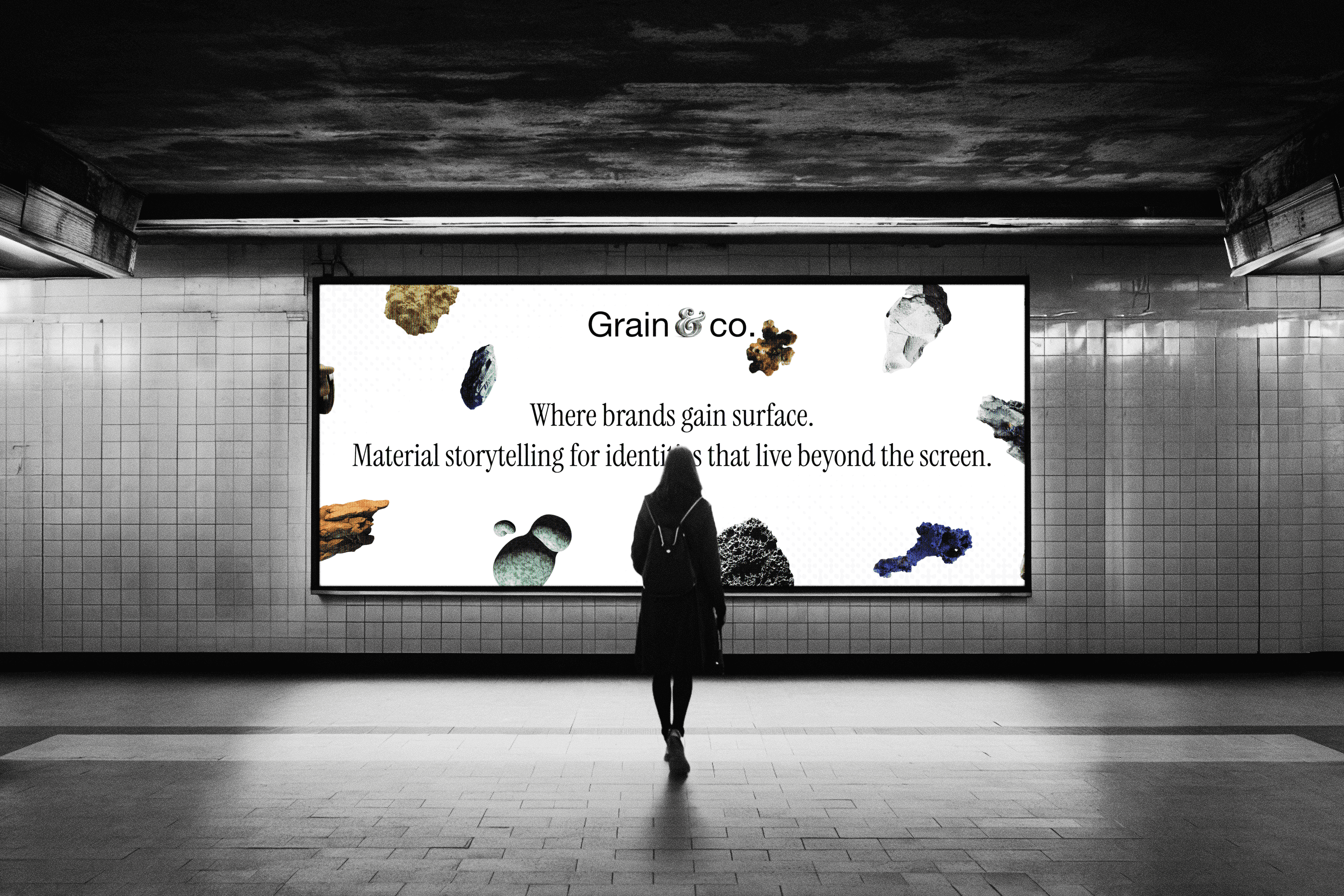
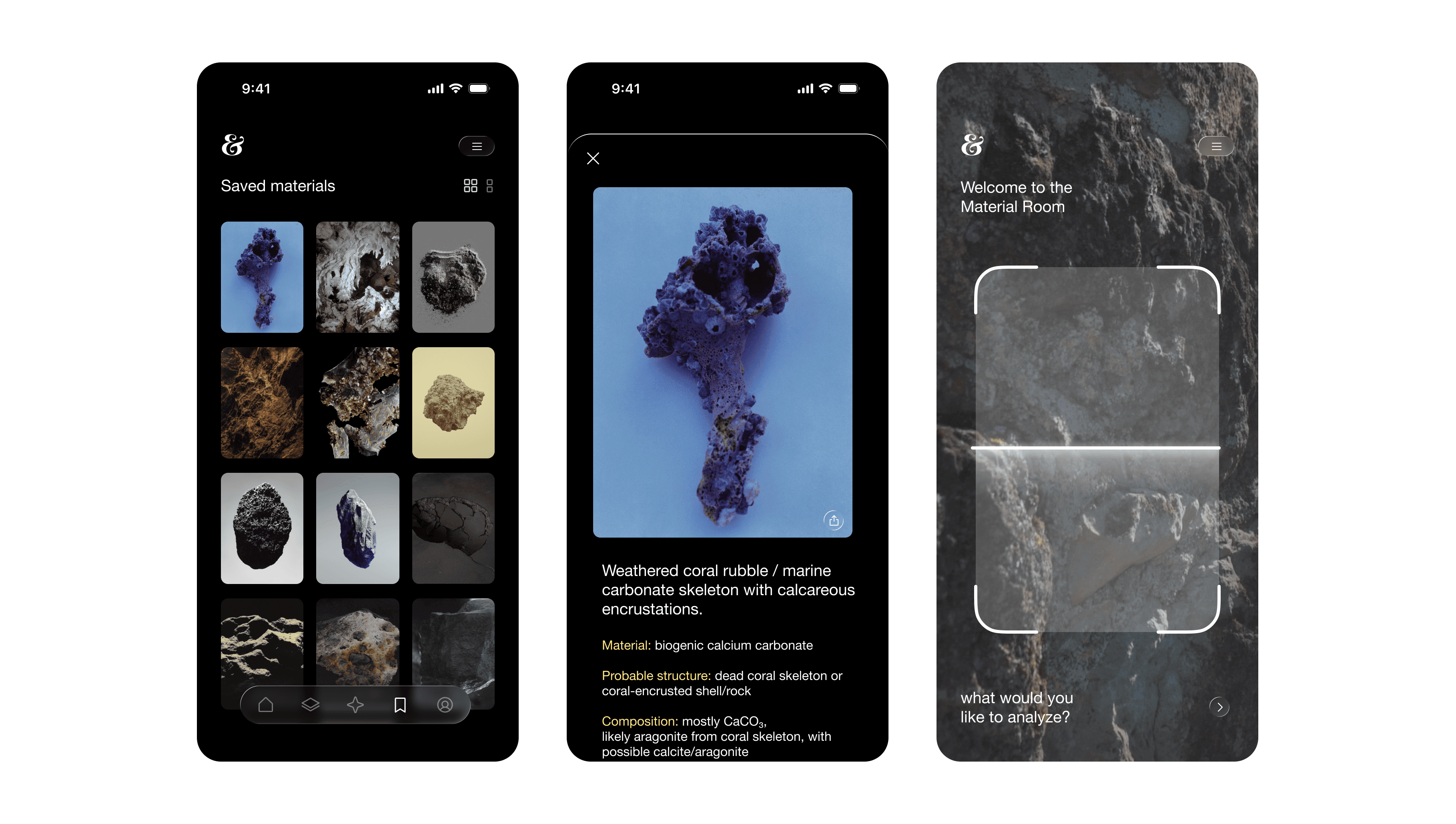
Grain & Co. is a 3D material analysis platform and brand, a tool for designers, architects, and creative directors to explore, identify, and understand physical materials through high-fidelity surface rendering. Available across web and mobile, it combines a material intelligence engine with a visual identity system built entirely from the surfaces it studies.
(context)
The flat branding problem
Where does material go when it goes digital?
Modern visual identities have become oversaturated with flat, screen-native aesthetics that strip away the physical presence of a brand. In a landscape of digital-only systems, there's a growing consumer appetite for something more, experiences that are tactile, layered, and alive with material intelligence.
Grain & Co. was developed to address this gap directly: building a brand platform where texture, surface, and sensory expression are the primary design language, not an afterthought.
Material analysis, rendered in three dimensions
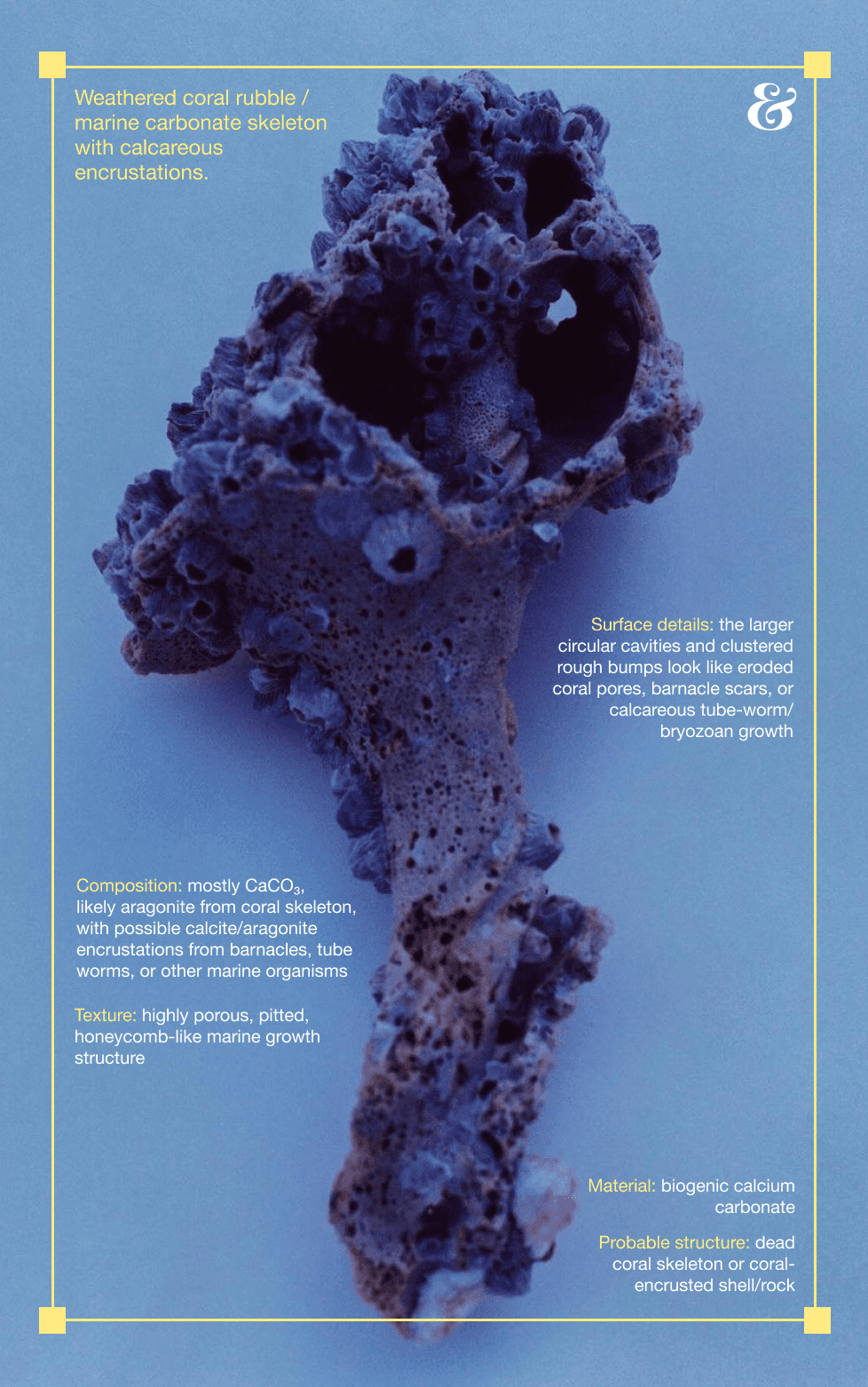
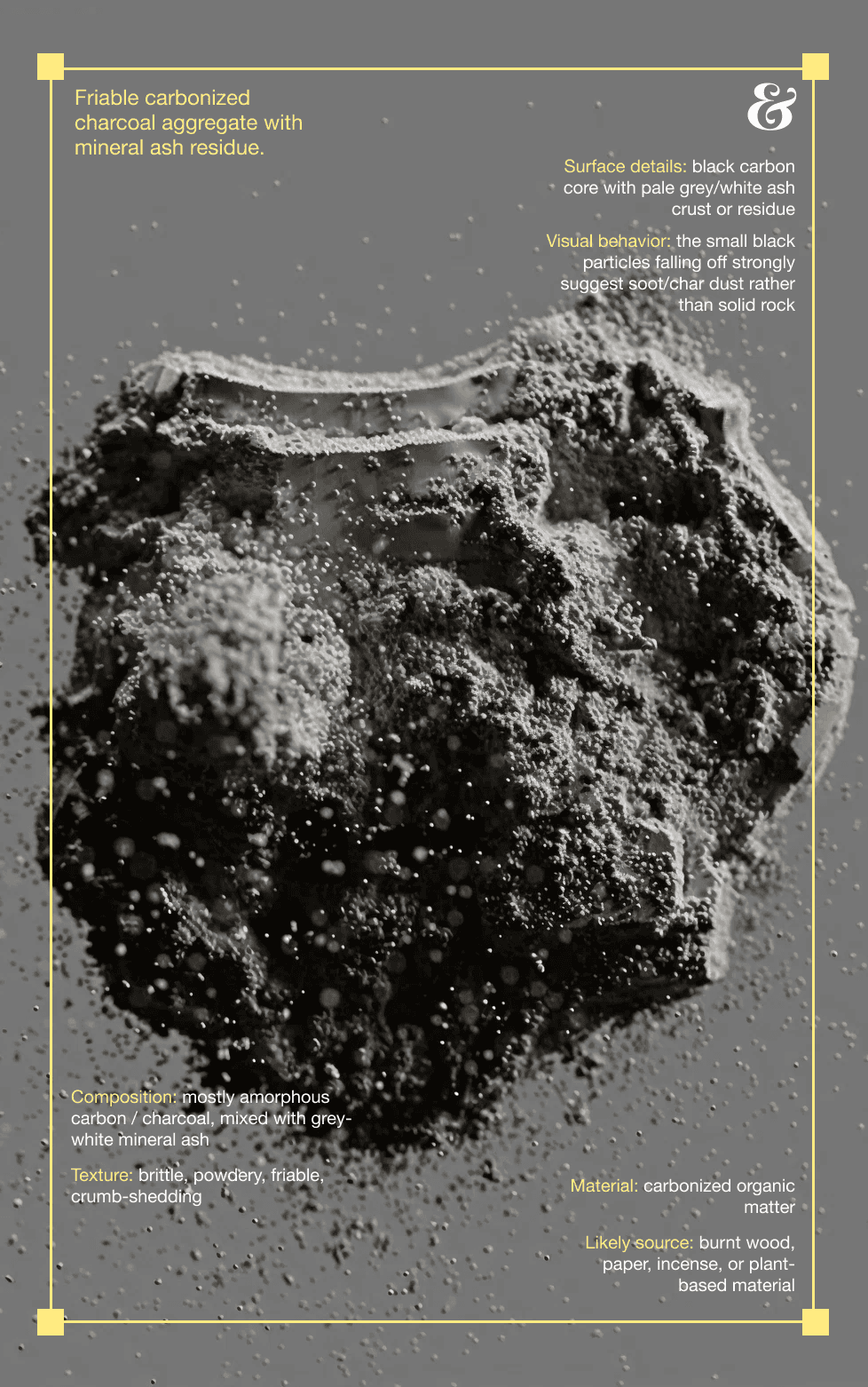
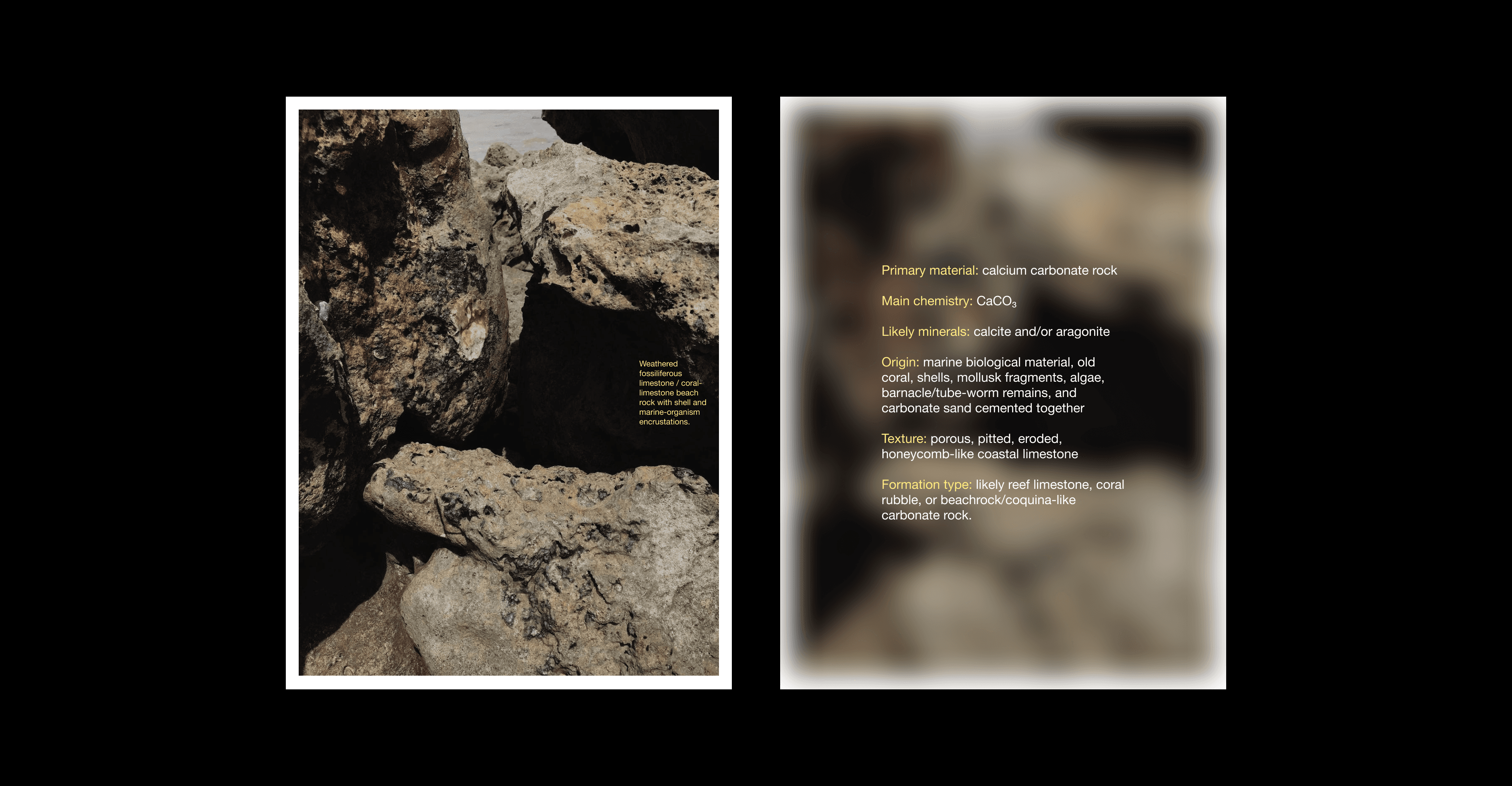
At its core, Grain & Co. is an analyzer. Users upload reference images or select from a curated library of specimens, stone, textile, leather, metal, wood, digital composite, and the tool returns detailed surface profiles: grain structure, light behavior, thermal weight, tactile class, and application context. The analysis runs in-browser and on mobile, making material intelligence accessible outside the studio and the spec sheet.
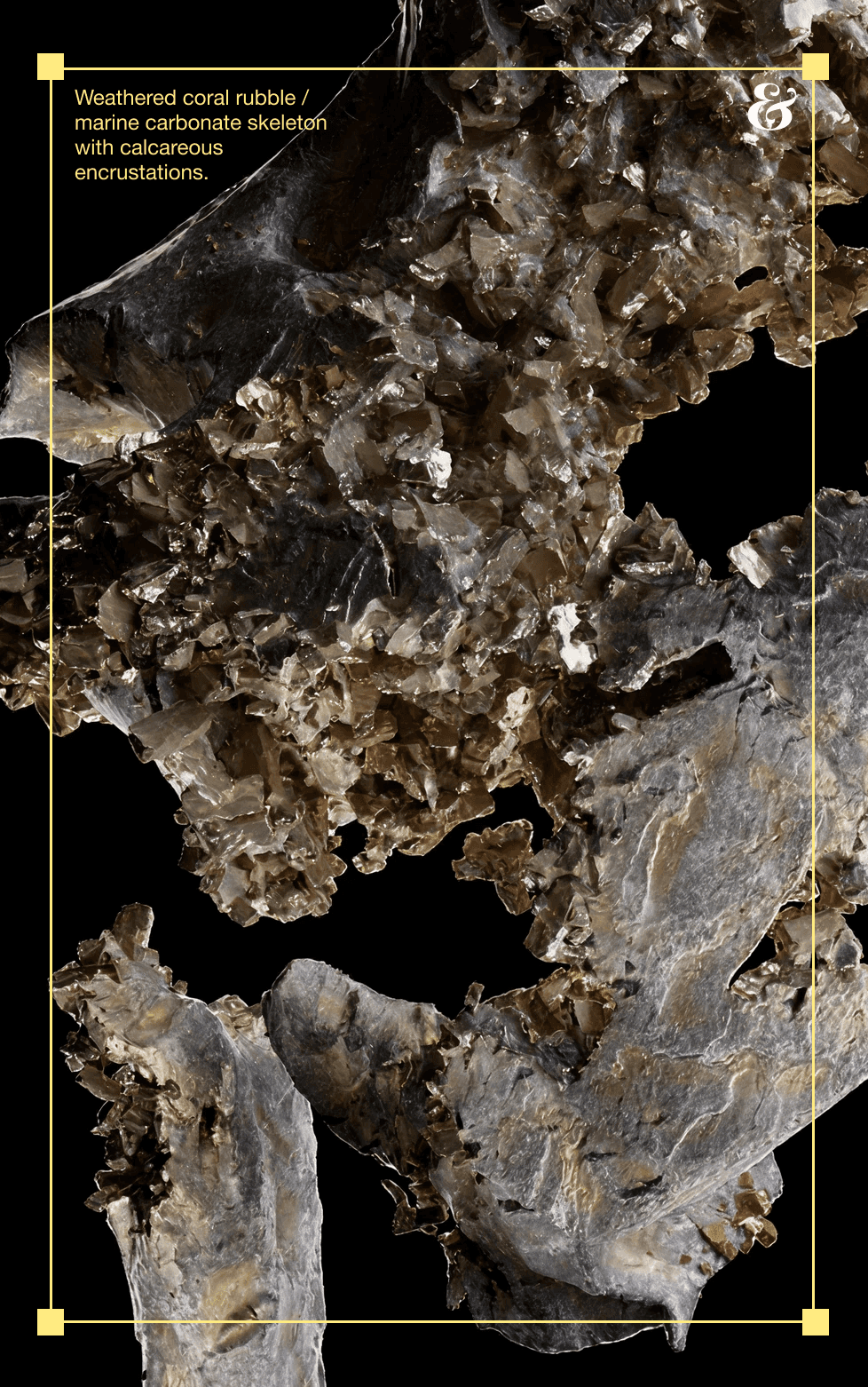
The 3D rendering layer isn't decorative. Each specimen is modeled with photorealistic fidelity so that surface behavior, how light rakes across a porous stone, how a woven textile catches shadow, communicates what a flat swatch cannot. Material is understood in depth, not just appearance.
A brand built from its own subject matter
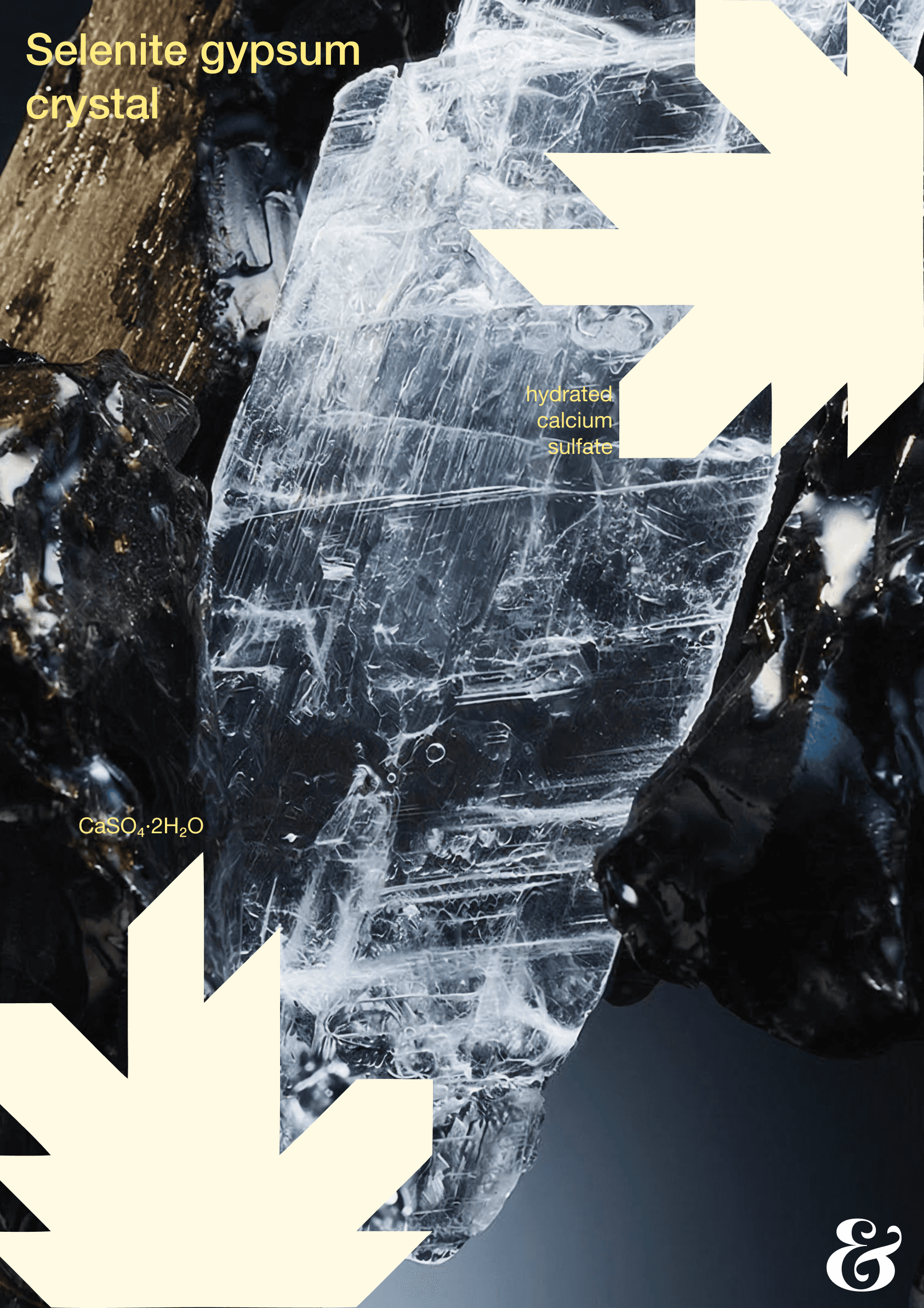
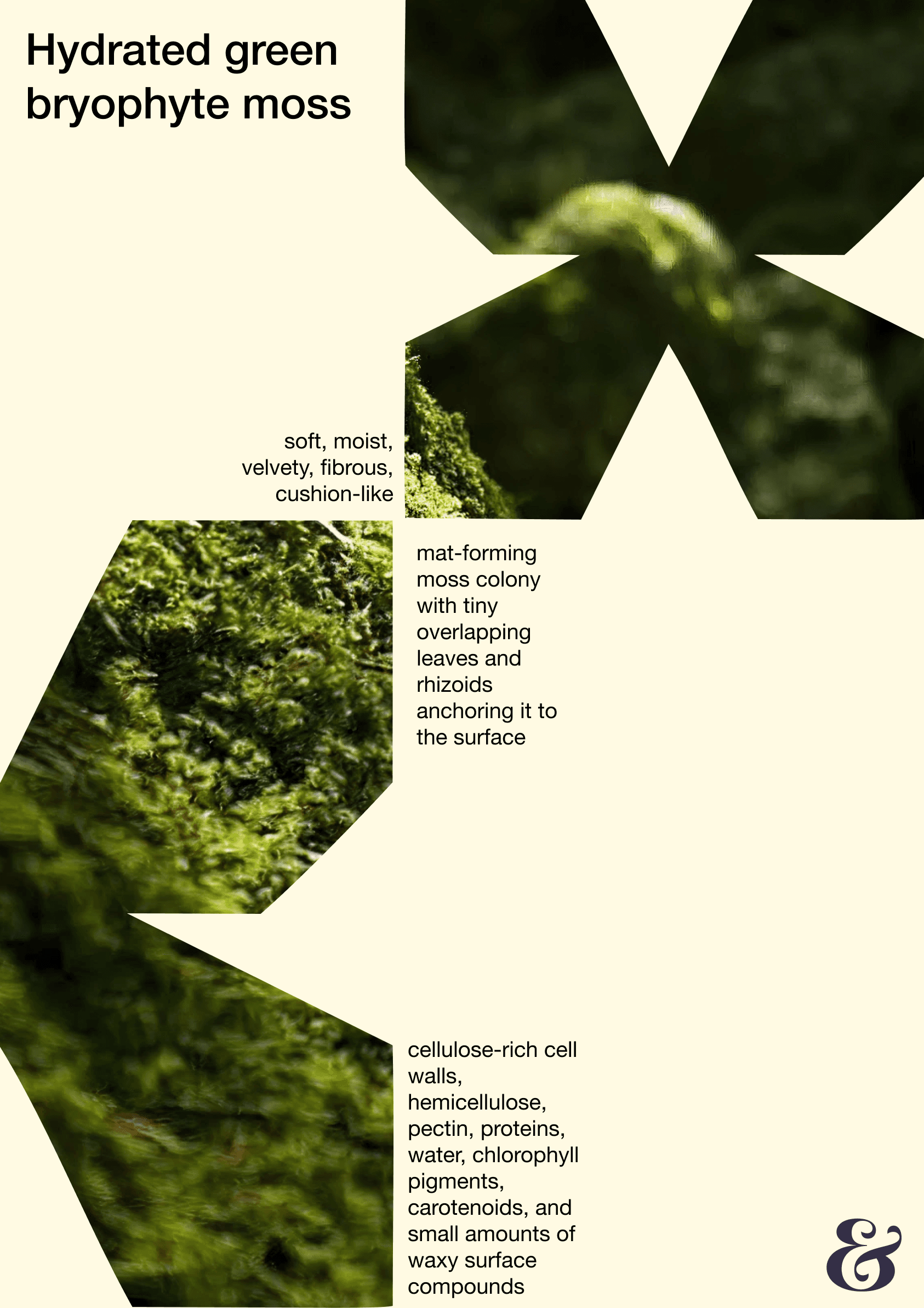
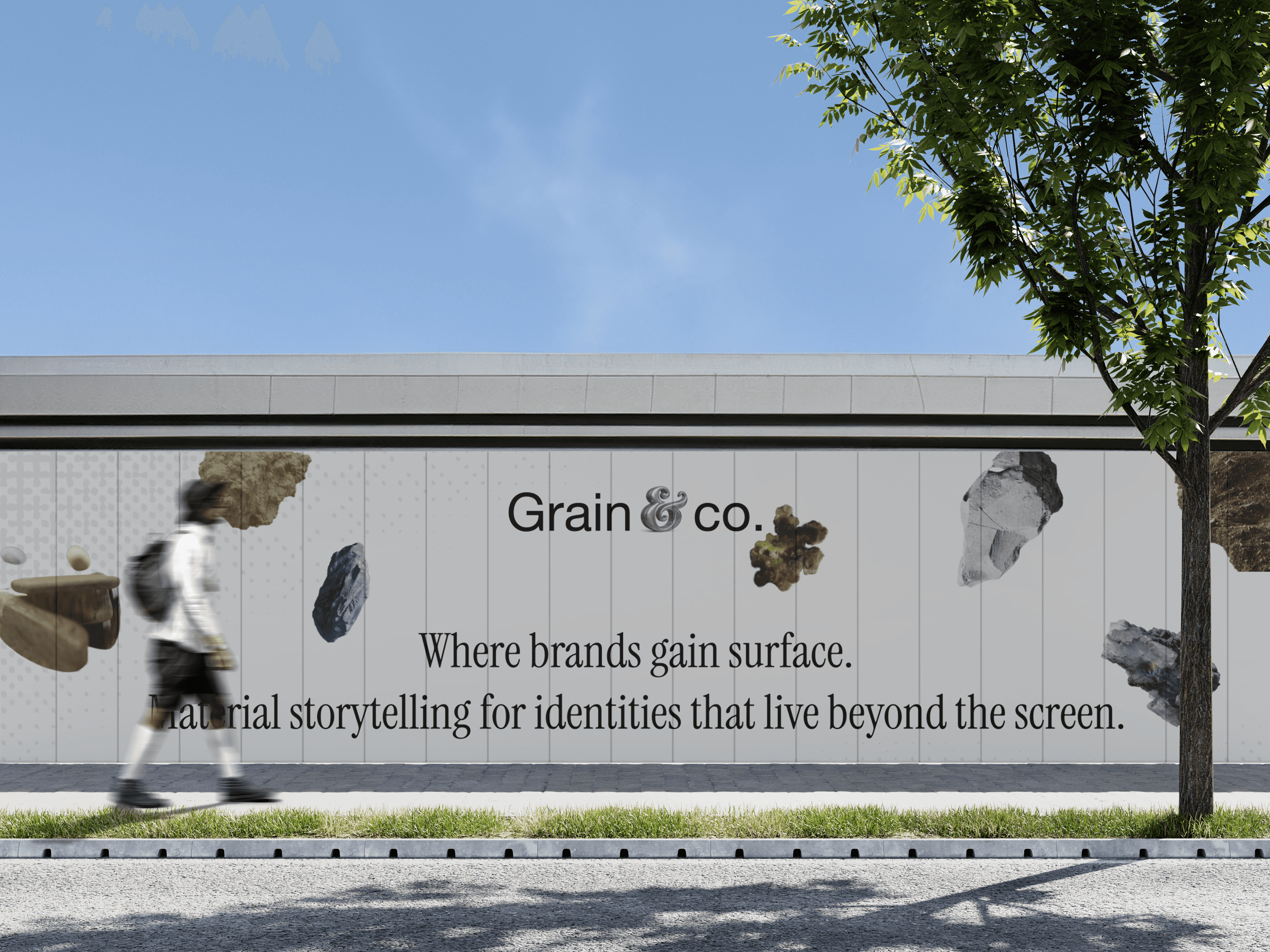
The visual identity of Grain & Co. is derived directly from the product's material library. The branding system uses volumetric specimen renders, rock, mineral, moss, and crystal as its primary graphic elements, displacing illustration and iconography with objects that carry real physical history. Typography is set against deep black to replicate how material appears under controlled studio light: isolated, precise, undecorated.
This is a product that looks like what it analyzes.

Still a lot more to come
"The most interesting design problem wasn't building the analyzer — it was making the brand feel like it had texture."
Grain & Co. pushed me to think about product identity as a material object, not a graphic system. Next directions include a haptic feedback layer for mobile (simulating surface weight and grain through vibration patterns), a physical brand artifact (a curated specimen swatch book), and an AR extension that overlays material analysis onto real-world surfaces through the phone camera.